
Munnings at 65: Private Worlds, Public Legacy
- Cultural Dose

- Apr 21
- 3 min read
At Munnings Art Museum, Pictures from Private Collections marks a 65-year milestone not with nostalgia, but with revelation. Opening in 2026, the exhibition brings together works by Sir Alfred Munnings that have largely remained out of view, reframing a figure often understood through familiarity as something more complex, more elusive.
Munnings has long occupied a particular place in British art. Popular, recognisable, and widely collected, his paintings especially his equestrian scenes have often been absorbed into a national visual identity. Yet this exhibition unsettles that ease. By drawing from private collections, it introduces works that disrupt the sense of completeness that typically surrounds his legacy.
What emerges is not a revision, but a widening.
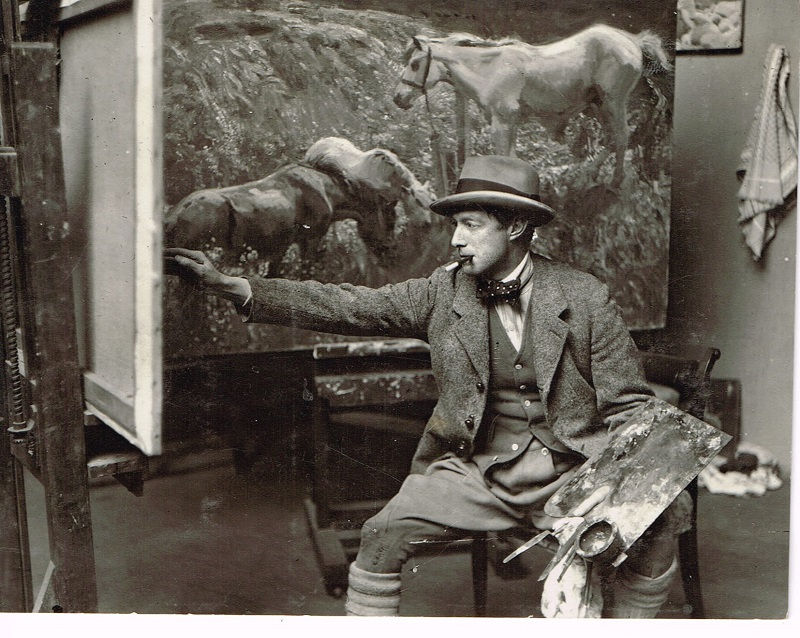
These rarely seen paintings reveal shifts in approach, subject, and atmosphere, tracing a career that extends beyond the motifs for which he is best known. Village figures, landscapes, informal studies, and unfinished ideas sit alongside the more familiar compositions, offering a more fragmented and therefore more revealing portrait of the artist.
At the centre of this narrative is The Grey Horse, a work that spans over a decade in its making. Begun in Cornwall and completed at Castle House, it embodies a continuity that defines much of Munnings’ practice. The decision to reunite this painting with related works marks a rare moment of alignment, allowing viewers to see not just the finished image, but the process that surrounds it.
Yet the exhibition does not focus on the artist alone. It foregrounds the figure of Violet Munnings, whose role in shaping the museum and, by extension, Munnings’ legacy becomes impossible to ignore. What began as a personal act of devotion, her preservation of Castle House as a “shrine” to her husband, has evolved into an institution that now defines the study of his work.
The story of the museum’s opening in 1961, marked by overwhelming public demand, offers a glimpse into the intensity of that legacy. The image of Violet, navigating crowds and defending her space, underscores the tension between private memory and public interest that continues to shape the museum today.

This tension is echoed in the companion exhibition, which explores the influence of John Constable. The connection is not simply stylistic. It reflects a deeper alignment in how both artists approached landscape, atmosphere, and the act of looking. Violet’s belief that Munnings was, in some sense, a continuation of Constable introduces a layer of myth that sits alongside the historical narrative.
What distinguishes this anniversary presentation is its attention to context. The museum is not treated as a static repository, but as an evolving space shaped by research, reinterpretation, and ongoing discovery. The effort to compile a comprehensive catalogue raisonné signals a shift toward a more rigorous understanding of Munnings’ output, one that acknowledges both its scale and its complexity.
Within the house itself, the experience remains intimate. Visitors move through the rooms where the work was created, encountering paintings in proximity to the spaces that produced them. This continuity between life and work reinforces the sense that Munnings’ art cannot be separated from its environment.
At 65, the Munnings Art Museum does not present a finished story. It presents a living one.
The exhibition reveals that even an artist as widely known as Munnings can still surprise, not through reinvention, but through the simple act of being seen again.


